
The Master Sword Is Anti-Capitalist
Why nothing must last forever (except growth)

Economic Policy Brief
Hyrulean Guild of Manufacturers and Artisans (HGMA)
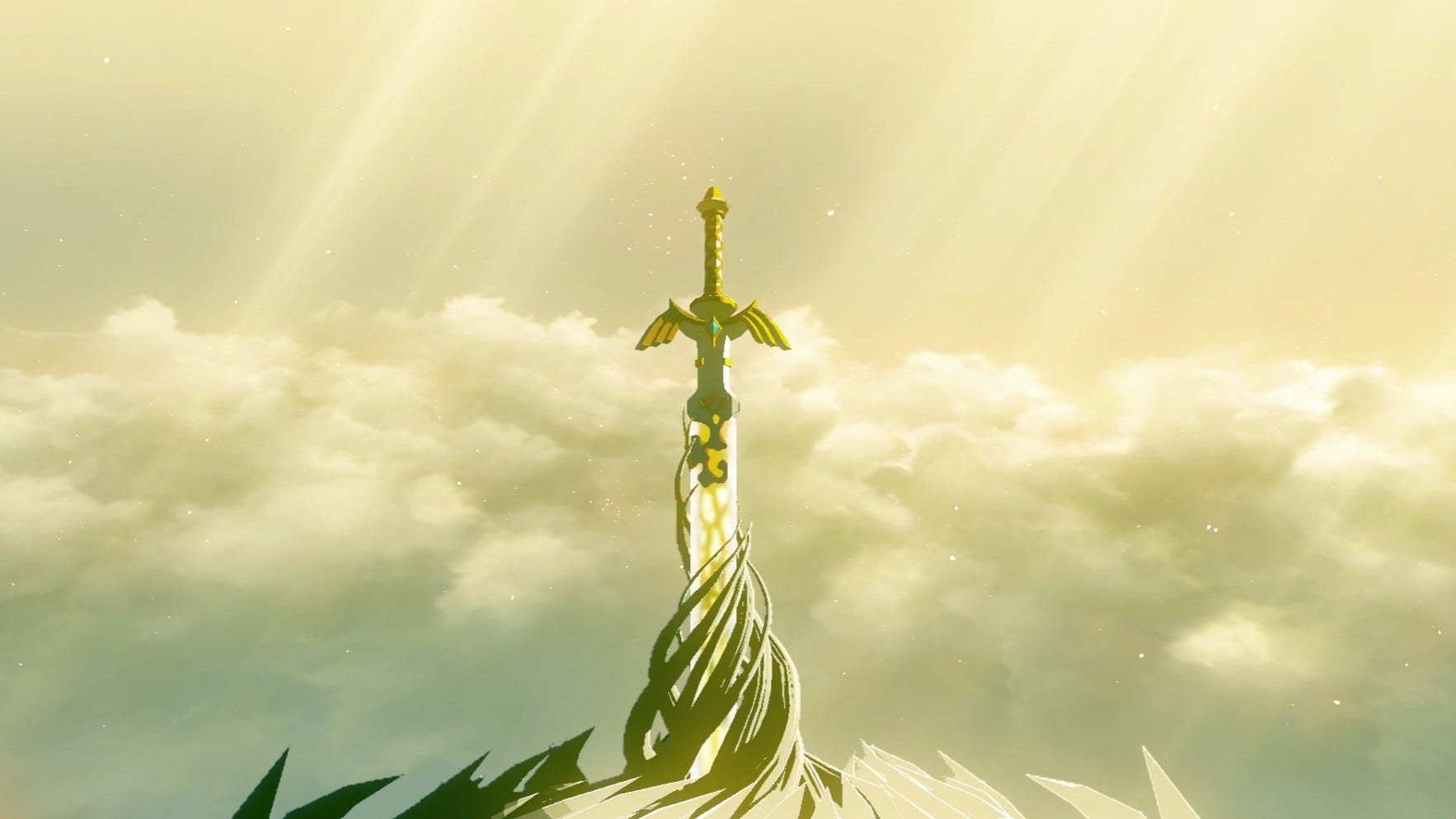
The Master Sword must be destroyed for good.
Its divine, nigh-indestructible existence is an existential threat to Hyrule’s economy.
Why?
It symbolizes an idea that is anathema to Hyrule’s free-market capitalism: high-quality, well-made products.
With the Master Sword, Link, the Champion of Hyrule, will never ever purchase a weapon again. He will never again support our hardworking miners, refiners and blacksmiths, the entire metal-working industry, because he will never need a new sword.
It doesn’t matter that Link saved the world.
He’s destroying our economy.
Hyrule’s prosperity depends on the circulation of capital. Robust, long-lasting products create economic stagnation and decay.
Recommendation: the Master Sword must be destroyed and all products in Hyrule must be of the lowest quality possible.
A broken, low-quality product is a sign of a healthy, vibrant economy.
Problem context
It seems counter-intuitive that well-made, durable products harm the economy.
Nothing is more destructive to GDP growth than never having to buy anything again.
Well-made, durable products are a dangerous idea because they are fundamentally anti-capitalist. Imagine:
People no longer purchase things because products work for a long time
No cash flows to businesses, which means they cannot innovate
Without innovation, there are no new products for people to buy
People only buy one thing because there are no other things to buy
The entire economy collapses because no one needs to buy anything
Consumption is the engine of Hyrule’s economy.
Nothing must get in the way of incessant, perpetual consumption.
If money never flows to companies, how will it trickle back down to consumers?
Durable, high-quality products are fiscally irresponsible.
Recommendation
To protect the prosperity and livelihoods of Hyruleans, all products made in Hyrule must be poorly-made, low-quality and designed for dependency.
The following design principles should be implemented to optimize all products for perpetual, repeat purchases:
Calibrated lifecycle optimization: planned obsolescence is a feature, not a bug. Everything must be designed to break at a moment that maximizes repeat purchases. Quality is wasteful overengineering
Anti-tamper design: all modifications, including repairs, must go through OEM (original equipment manufacturer) providers. Any modifications done by non-OEM providers constitutes IP (intellectual property) theft, punishable by death, because it is privileged information that belongs to shareholders
Central planning to avoid substitutes: all products must be unique. No two products can solve the same problem, ensuring there is no waste for companies and no choice for consumers
Well designed products that follow these principles will be fragile, impossible to maintain and the only choice available.
The Kingdom has a moral duty to its citizens to ensure the economy never falters, and a fiduciary duty to its investors that the line always goes up.
This is the invisible hand of the Triforce at work.
Addressing criticisms
Some believe that just because they bought something, they own it forever. That their rights as consumers take priority over the needs of the economy.
They are wrong.
There is well-documented proof that people prefer not owning products because they prefer recurring subscriptions.
Ownership is suffering.
Material attachment is the root of all evil, so proactively preventing people from owning anything, because they are poorly-made, is actually a net positive for society.
In fact, by renting everything, people are freed from suffering. When they don’t own anything, people accept impermanence, find inner peace and release all mental attachments to craving.
Abolishing ownership of private property is spiritual enlightenment.
Looking ahead
Hyrule’s economy relies on its citizens being permanently, structurally helpless: capable of generating demand but never able to permanently satisfy those demands.
Economic growth requires calibrated, symbiotic dependency.
Naturally, this follows that self-sufficiency must be criminalized. Helping oneself instead of perpetually renting a product from a company is theft.
Ownership is theft.
The ideal citizen should be unable to survive without paying for it.
Nothing should last forever except economic growth.


All hail the invisible hand of the Triforce